
Engagement photos should feel like you. Not stiff, not overly posed, just real moments that show how you actually are together. The best engagement photo session ideas start with understanding what makes your relationship unique, then building a shoot around that authentic story.
Why Engagement Photos Matter (And When to Schedule Them)
Engagement photos are your first real session together as an engaged couple. They’re practice. They’re also the images you’ll frame, print on Save the Dates, and share on your wedding website. So yeah, they matter.
The sweet spot timing is about 8-10 months before your wedding. This gives you breathing room and lets you see how comfortable you both are on camera before the big day. But honestly? Schedule whenever it feels right for you. Some couples love doing them right after getting engaged while the excitement is fresh. Others wait and plan something more elaborate.
Location-Based Engagement Photo Ideas
Your location sets the entire vibe. Pick somewhere that actually means something to you both.
Beach & Coastal Sessions
Sand, water, golden hour light. You can’t really go wrong here. Walk along the shore together, hold hands, run (yes, run in your nice clothes – it’s fun). Wade in shallow water. Sit on a blanket and just talk. The ocean is a natural backdrop that works with almost any outfit color.
Mountain & Forest Settings
If you’re outdoorsy people, lean into it. Hiking trails, overlooks, wooded areas. These locations feel intimate and cinematic. You can sit on a rock, walk a trail together, or pose against a dramatic vista. The autumn colors or spring blooms add bonus visual interest without trying.
Urban & Downtown Vibes
City streets, brick buildings, cool alleyways. Urban sessions work great if that’s your world. Walk down a street together, interact with storefronts, sit on a curb, lean against a wall. The backgrounds feel real and connected to your actual life.
Home or Backyard Sessions
Sometimes the best backdrop is somewhere comfortable. Your living room, your kitchen, your backyard. These sessions feel super natural because you’re literally at home. Bonus: you save travel time and can do it more casually.
Activity-Based Engagement Ideas
This is where your personalities really shine through. Don’t just stand there looking pretty. Do something together that you actually enjoy.
Movement & Playfulness
Ice skating, roller skating, dancing in the kitchen, jumping on a trampoline. Movement is magical for photos because it’s hard to look stiff when you’re laughing at yourself falling on ice. You get genuine smiles and natural interaction.
Shared Interests
If you both love coffee, shoot at your favorite café. Love books? Library or bookstore session. Love dogs? Bring your pup. The more authentic the activity, the more authentic the photos will feel. Brian Lundy Photos specializes in capturing these real-moment sessions where you’re doing what you actually do.
Try Something New Together
Paint and sip, axe throwing (yes, that’s become a thing), cooking together. Doing something slightly out of your comfort zone together creates natural bonding moments that look amazing on camera. Plus you have a fun story to tell.
Outfit Coordination for Engagement Photos
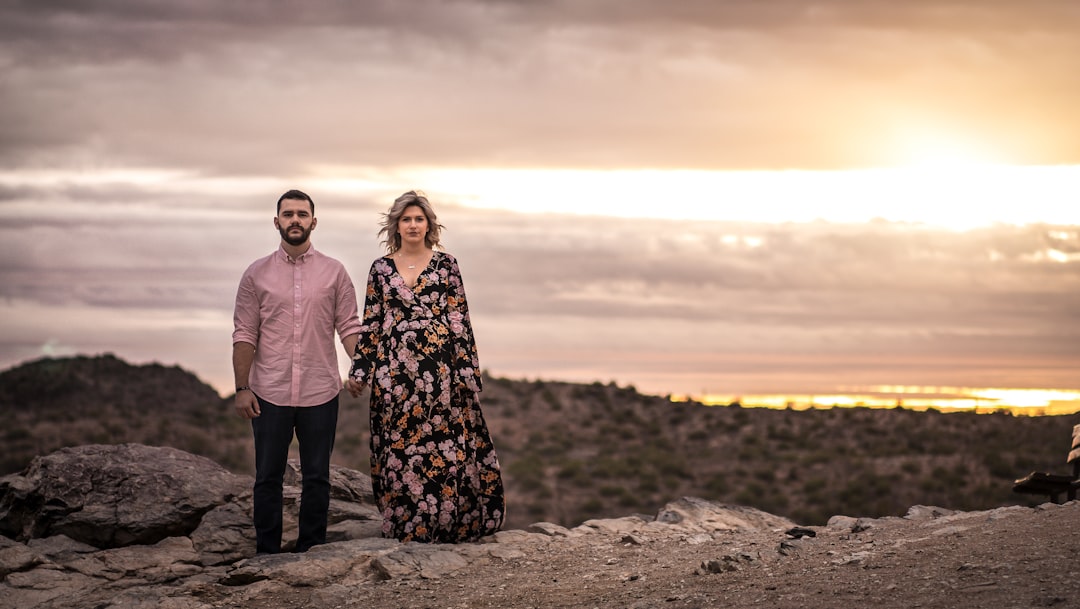
Your outfits should feel like you and photograph well. This matters way more than you think.
Color Palette That Works
Beige, tan, cream, denim, olive green, terracotta, and black are your safest bets. These colors work with all skin tones, all seasons, and basically every landscape. They look intentional without screaming “we tried too hard.”
Avoid bright white or anything that feels costume-y. You want to frame these photos in your home someday, which means they need to feel timeless, not trendy.
Outfit Tips
Choose things you’d actually wear. If you hate dresses, don’t wear a dress just because it’s for photos. Wear what makes you feel confident. Make sure your outfits complement each other without being matchy-matchy. One person in solid color, one in a pattern. Both in neutrals. Whatever feels natural.
Coordinate your colors before the session, but do it together. Your photographer at Brian Lundy Photos can give you color recommendations based on your location and skin tone, but you should feel good in what you’re wearing.
Pose Ideas That Actually Look Natural
Good engagement photos don’t look posed. They look like candid moments from your life. Here’s how to nail that.
The Walk & Talk
Walk toward the camera holding hands. Look at each other. Laugh. This is the bread and butter of engagement sessions and it works because it’s movement, not a frozen moment. You’re literally interacting, which reads as genuine.
The Lean & Laugh
Lean against a wall together, foreheads almost touching, and just talk. Your photographer will catch genuine laughs and connection naturally. You’re not “posing,” you’re just being close.
Sitting & Connecting
Sit on a blanket, a bench, a curb. Sit close. Hold hands. One of you can look at the camera while the other looks at their partner. These moments feel intimate and frameable.
The Over-the-Shoulder Look
Stand close, one person slightly in front, both looking back at the camera. Simple, flattering, shows your closeness without being awkward.
Movement & Candids
Walk a trail, run through a field, dance. The more you’re doing something instead of standing still, the more natural you’ll look. Your photographer will capture the real moments between the “poses.”
Pre-Session Planning Checklist
A little prep goes a long way. You don’t need to overthink this, but a few decisions up front make the session flow better.
- Decide on your location 2-3 weeks out
- Research the spot at the same time of day you’ll be shooting (lighting matters)
- Plan outfits together and maybe do a quick FaceTime to make sure colors work
- Get your hair and grooming done the day of (don’t try anything new the morning of your session)
- Eat a decent breakfast so you’re not hangry
- Leave extra time to get to your location so you’re not stressed
- Trust your photographer to guide you through poses
Working With Your Photographer
The photographer’s job is to make you comfortable and capture real moments. A good one will give you direction without making you feel robotic.
Communication matters here. Tell your photographer what you’re hoping for. Share your personality, your vibe, what makes you laugh. The more your photographer understands your relationship, the better they can anticipate and capture genuine moments.
When you’re working with Brian Lundy Photos, expect guidance that feels natural. You’ll get clear direction on where to stand, what to do, how to interact, but it never feels stiff. The goal is authentic connection, not perfect poses.
Timing & Light Considerations
Golden hour (the hour before sunset or just after sunrise) is magic for engagement photos. The light is warm, soft, and flattering. Everything looks better in golden hour, honestly.
Related: Best Poses for Engagement Photos: A Pro Guide
If you’re doing a daytime session, overcast days are actually great because there are no harsh shadows. You don’t get those weird shadows under your eyes or sharp contrasts.
Plan your session timing when you book. Your photographer will recommend the best times based on your location and the look you’re going for.
Budget & Session Length
Engagement sessions typically run 1-2 hours. That’s enough time to hit 2-3 locations or really nail one location with lots of variety. You’ll get 50-150+ edited photos to choose from, depending on your photographer’s package.
Pricing varies, but quality engagement photography is an investment worth making. These images are something you’ll have forever and display in your home. Brian Lundy Photos offers flexible packages for engagement sessions that work for different budgets and visions.
Common Engagement Photo Session Mistakes to Avoid
Learn from what doesn’t work. Don’t wear all white (it blows out in photos and limits your options). Don’t try a completely new hairstyle the day of. Don’t overdress or wear something uncomfortable. Don’t pick a location just because it looks cool if it doesn’t mean anything to you. Don’t overthink every pose. Don’t show up to a sunset session an hour late.
Basically: be authentic, be prepared, and be on time.
What to Do With Your Engagement Photos
After your session, you’ll have beautiful images. Use them. Print them. Frame one for your home. Share them on social media. Use them on your Save the Dates or wedding website. Order a canvas print or a photo book. These images deserve to be seen and enjoyed, not stuck on a hard drive.
What should I wear to my engagement photos?
Wear something that feels like you and makes you confident. Neutral colors like beige, denim, olive, or black work with any background. Avoid pure white and anything costume-y. Coordinate with your partner so your outfits complement each other, but you don’t need to be matchy-matchy. Most importantly, pick clothes you’d be happy seeing framed on your wall five years from now.
How long should an engagement photo session be?
1-2 hours is the standard. This gives you enough time to hit multiple locations or really explore one spot with different angles and natural interactions. You’ll end up with a ton of options to choose from. If you want more locations or have specific ideas that need extra time, talk to your photographer about extending the session.
When should I schedule my engagement photos?
8-10 months before your wedding is the recommended timeline. This gives you breathing room and lets you see how you both look on camera before the wedding day. But honestly, schedule whenever feels right. Some couples love doing them right after getting engaged while the excitement is fresh. Others prefer waiting until after wedding planning has ramped up.
How many outfits should we have for an engagement session?
Two outfits is ideal if you’re doing a 1-2 hour session across multiple locations. One outfit can work if you’re staying in one location and want to maximize shooting time without wardrobe changes. More than two outfits can eat into your actual shooting time, so balance is key. Talk to your photographer about what makes sense for your vision.